
AI is already reshaping cybersecurity, but not in the way most headlines suggest. It does not replace core security disciplines or magically stop attacks. Instead, it accelerates everything that already exists — both on the attacker and defender side.
In practice, this means organizations with weak access controls and loose privilege management feel the negative impact first. Those with disciplined authentication and privileged access strategies are the ones who actually benefit.
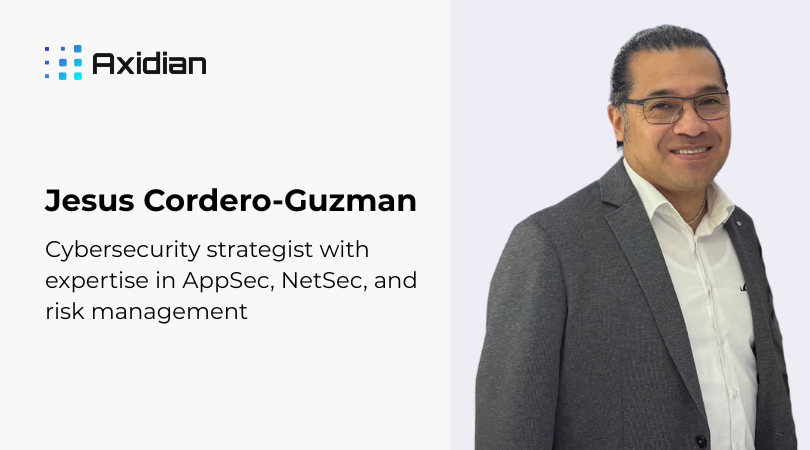
As Jesus Cordero-Guzman, Cybersecurity Strategist, puts it:
“AI doesn’t invent new attack paths. It makes existing ones faster, cheaper, and harder to notice.”
This article looks at how AI is used in cybersecurity today, where it genuinely helps, where it increases risk, and what this shift means for authentication and privileged access.
How AI is changing cybersecurity
AI has changed the speed and scale of cyber operations, but it has not changed their core mechanics. Most successful attacks still begin with access: compromised credentials, abused authentication flows, or excessive privileges. AI simply makes these techniques more efficient.
For defenders, AI enables faster analysis of large volumes of security data. For attackers, it lowers the barrier to launching convincing phishing campaigns, testing credentials, and identifying high-value targets. In both cases, identity sits at the center of the equation.
AI does not fix structural security problems, it makes them more visible.
How AI is used in cybersecurity today: real advantages for defenders
AI in prevention against cybersecurity threats through behavioral detection
One of the most practical applications of AI in cybersecurity is behavioral analysis. Instead of relying solely on static rules, AI models can detect deviations in login behavior, access timing, device usage, and session patterns.
This is especially effective when applied to authentication events. Subtle changes, such as unusual access sequences or logins from atypical environments, can signal compromised accounts long before traditional alerts fire.
However, behavioral detection only works when authentication data is centralized. If MFA, SSO, Windows logon, VPN, and application access all live in separate silos, AI has nothing coherent to analyze. Centralized authentication platforms, such as Axidian Access, create the consistency required for meaningful detection across access flows.
AI-driven automation in cybersecurity: faster response, not blind trust
Automation is another area where AI delivers real value. When a threat is detected, AI-assisted workflows can help isolate sessions, restrict access, or escalate authentication requirements faster than manual processes allow.
What AI should not do is make trust decisions on its own. Over-automated access decisions can normalize risky behavior if the underlying policies are weak.
As Jesus Cordero-Guzman notes:
“Automation works best when it shortens response time, not when it replaces human judgment.”
Used correctly, AI strengthens response. Used carelessly, it simply accelerates mistakes.
Cybersecurity vs AI: where artificial intelligence increases risk
AI-powered social engineering and authentication abuse
AI has significantly raised the quality of social engineering attacks. Phishing emails are now well-written, context-aware, and often indistinguishable from legitimate messages. More importantly, AI enables attackers to adapt attacks in real time based on user behavior.
This is particularly dangerous for push-based MFA. MFA fatigue attacks rely on overwhelming users with authentication prompts until one is approved. AI helps attackers time these prompts more effectively, making approval feel routine rather than suspicious.
The lesson here is clear: MFA alone is no longer sufficient. Authentication must adapt to context, not just stack additional factors.
Privileged access as a primary target in AI-driven attacks
Once attackers obtain initial access, privileged identities become the fastest route to control. AI helps attackers identify these accounts by analyzing directory structures, access relationships, and usage patterns.
Privileged accounts — administrators, service accounts, automation identities — offer disproportionate impact. A single compromised privileged session can disable controls, create persistence, or expose entire environments.
This is where disciplined privileged access management becomes critical. Axidian Privilege addresses this risk by discovering unmanaged privileged accounts, rotating credentials, enforcing access policies, and recording sessions. These controls limit the blast radius even when access is abused.
As Jesus Cordero-Guzman puts it:
“Once AI helps attackers reach a privileged account, the damage potential multiplies immediately.”
AI-generated code and hidden identity vulnerabilities
AI-generated code introduces another, less visible risk. When developers rely on generated output without fully understanding it, insecure authentication flows, hard-coded credentials, and weak access controls can enter production unnoticed.
This risk is highest in teams with limited security experience. The problem is not AI-generated code itself, but the false sense of confidence it creates. Identity flaws introduced at the code level are difficult to detect later and often bypass traditional security controls entirely.
Will cybersecurity be replaced by AI? Why access control still matters
AI will not replace cybersecurity professionals or core security disciplines. What it will replace is complacency.
Organizations that rely on fragmented IAM systems, inconsistent MFA policies, or unmanaged privileged accounts will find that AI amplifies their weaknesses. Conversely, organizations with strong access discipline gain real defensive advantages from AI-driven analytics and automation.
Zero Trust principles remain relevant precisely because they treat every access request as a risk decision. AI can enhance this model, but it cannot compensate for missing controls or unclear ownership of identities.
AI and identity security: what changes for authentication and privileged access
Adaptive authentication: how AI affects MFA and SSO strategies
Authentication strategies must evolve from static enforcement to adaptive decision-making. AI enables authentication systems to adjust requirements based on context, risk signals, and historical behavior.
Centralized platforms like Axidian Access make this possible by acting as a single control point for MFA, SSO, and policy enforcement across applications, operating systems, and remote access scenarios.
Privileged access management in an AI-driven threat landscape
In an AI-driven threat landscape, privileged access must assume compromise. Least privilege, time-bound access, and full session visibility are no longer optional.
Axidian Privilege supports this approach by enforcing controlled privileged sessions, vaulting credentials, rotating secrets, and maintaining detailed audit trails. These measures ensure that even if AI accelerates attacks, their impact remains contained.
AI will not replace cybersecurity but it will expose weak access strategies
AI is neither a threat nor a solution on its own. It is an accelerator. It accelerates attacks where access controls are weak, and it accelerates defense where identity and privilege management are mature.
Organizations that invest in authentication discipline, centralized access control, and privileged session visibility will be able to use AI as an advantage. Those that do not will simply help attackers move faster.
As Jesus Cordero-Guzman concludes:
“I’m curious to see which organizations embrace AI with strong cyber hygiene — and which ones learn the hard way.”